
Last week, a researcher reverse-engineered their own Samsung TV after noticing targeted ads that matched private conversations. They found automatic content recognition capturing the screen every 500 milliseconds, data fingerprinted with household and device identifiers, and flows to Samsung's advertising network and its data partners, including Experian's identity records covering 128 million US households. Samsung has now faced lawsuits in both Texas and California over these practices.
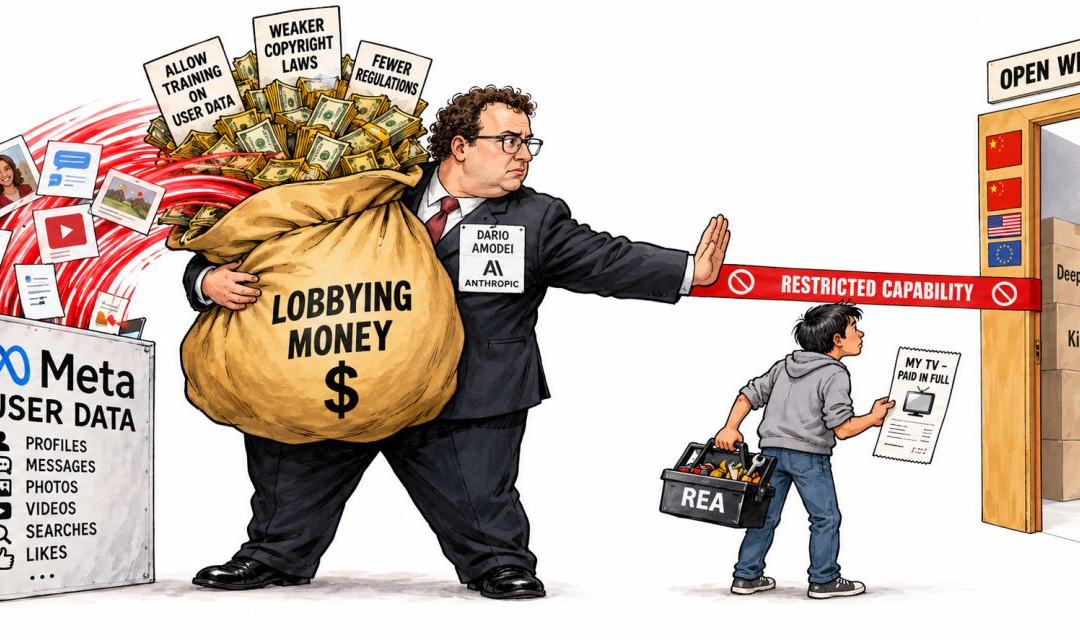
Within days, both Anthropic and OpenAI reportedly restricted their AI models from assisting with reverse engineering work. The tool driving this research is REA, an open-source MCP server that became one of the fastest-trending GitHub repositories this year by connecting AI agents to established reverse engineering frameworks like Ghidra. The underlying decompilers are decades old. REA just made them accessible to anyone who could describe what they wanted to find.
Consider what the restrictions actually protect. Not military systems. Not critical infrastructure. The people blocked are device owners inspecting hardware they purchased with their own money. The capability they were exercising exposed data extraction practices already under active litigation in multiple jurisdictions.
Now consider why the restrictions fail on their own terms. REA connects to any language model. DeepSeek V4, Kimi K3, Qwen, and GLM-5.2 all run locally on consumer hardware with no API terms of service, no usage classifier, and no account to ban. Every restriction on Western commercial models pushes researchers toward Chinese open-weight alternatives, which is precisely the outcome the US national security framing claims to prevent.
The structural pattern predates AI entirely. Build a capability. Restrict it to your own security apparatus. Deny it to competitors and the public. Frame the denial as safety. This is the same architecture as 1990s encryption export controls, which failed for the same reason: the math does not respect jurisdiction.
Anthropic spent $3.53 million on federal lobbying in H1 2026, nearly tripling its prior-year outlay, advocating regulatory frameworks that open-weight models structurally cannot meet. David Sacks, the White House AI and crypto czar, publicly accused Anthropic of pursuing regulatory capture against open-source competitors.
The restriction does not reduce the capability. It relocates it. And it shields corporate surveillance infrastructure from the only people who were actually holding it accountable.